
Field service teams are the unsung heroes aka the backbone of industries that rely on operations outside traditional office spaces. Hence, businesses must ensure to keep such crucial teams well-connected and collaborative then only their field service management can stay better & effective!
These field services are indeed a game-changer and no one can deny that! However, what is making this field service management indispensable? It just can’t be about assigning tasks, because it’s also about transforming the way teams operate with real-time updates, smarter resource allocation & streamlined workflows!
In this blog, we will be helping you explore how field service management systems can enhance communication, boost collaboration & help businesses overcome operational challenges. So, without any further ado let’s start exploring all the crucial topics!
Field Service Management Role: Comprehensive Overview
Field Service Management is also known as the FSM, it’s a system designed to manage and coordinate field operations efficiently. This field system on the go involves using various tools, software, and processes just so it can assign tasks, track progress, and ensure seamless communication between field teams & office personnel.
The very basic goal of this system is to substantially enhance productivity, keep delays to the minimum, and provide exceptional service consistently. So, let’s see what the key factors for the best field service management solutions.
Factors to Consider for the Best Field Service Management
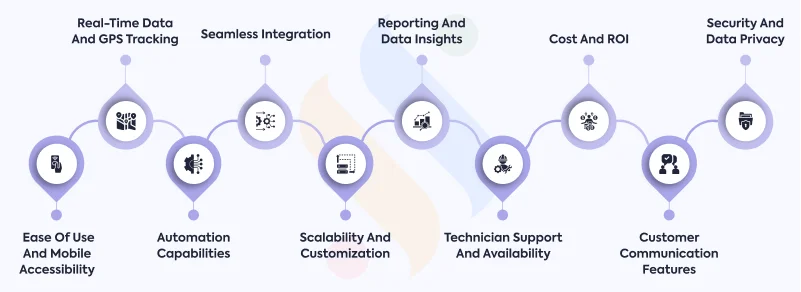
1. Ease of Use and Mobile Accessibility
Make sure the FSM software you choose is user-friendly enough so that both managers and field teams can adopt it in no time. Having a cluttered or complex interface can affect the operations, so simplicity is the best option. Another thing is to make sure it has offline mobile capabilities.
With mobile access, your field workers and field service technicians can access schedules, update job statuses, add notes, and communicate with the back office team as per their availability and without any customer location boundaries. It is vital to get real-time updates and maintain operational efficiency. By using a mobile-friendly platform, you can keep your team connected, whether they are field-based workers or remote teams travelling to different locations.
2. Real-Time Data and GPS Tracking
To improve field service operations efficiency, real-time data is something that you can’t skip. With GPS tracking, managers can analyze the exact location of their field employees, taking care that jobs are completed on time and taking care that routes are optimized. Make sure the system you choose has the features found most commonly in route planning software. It even helps you browse the complete service history of a field employee. This field service reports eliminates unnecessary delays, helps in resource utilisation, and improves overall service efficiency.
Having a system with real-time data, you can check instant updates on job progress, customer requests, and technician availability and make informed decisions. When it comes to customers, they benefit from accurate delivery or service time estimates, which improves customer loyalty, satisfaction and trust in your business.
3. Automation Capabilities
With automation, businesses can improve field service operations by reducing manual intervention in everyday tasks. The team can automate their scheduling, dispatching, and invoicing tasks to save time and reduce errors. For example, with automated scheduling, the team takes care that the right technician is assigned the right task as per their skill set and current location.
With this, the team can reduce their downtime and improve response times. By using automation, you can also prioritize your tasks and reduce administrative pain. Thus, your team can put their efforts into delivering exceptional service rather than devoting time to managing everyday operations.
4. Seamless Integration
The possibility of integrating with existing field service management tools like HRMS & payroll software, CRMs, or inventory systems is important for streamlined workflows. Having a centralized single platform, that links all important business functions reduces the need for multiple segregated systems.
For example, by having routing planning software integrated, technicians can get optimized directions, decreasing fuel costs and travel time. Seamless integration also encourages a holistic approach with smooth data sharing among departments, helping to make communication better and resolve issues better, which ultimately improves efficiency and service delivery.
5. Scalability and Customization
As you scale your business, your software must be able to accommodate the changes too. Scalable solutions can manage increased tasks, recurring services, multiple locations, and expand teams without compromising business performance. By using customization, businesses can use features as per their needs, like creating workflows as per the unique service operations or making changes in dashboards so that they can concentrate on important metrics.
The field service solution that is scalable and can be customized makes sure that your field service operations are efficient enough and can be easily adapted irrespective of the business size or industry needs.
6. Reporting and Data Insights
A powerful reporting system gives actionable insights into field operations. Performance metrics such as job completion rates, technician productivity, and customer satisfaction scores help find strengths and areas that need improvement.
These insights help managers make data-based decisions and continuously optimize workflows. Detailed analytics also help in tracking costs, assessing ROI, managing service appointments and forecasting resource needs. By understanding operations clearly, you can fix the issues timely, improve customer experiences, and maintain a competitive edge.
7. Technician Support and Availability
Field technicians are the face of your business, and matching the frequency with them is essential. The best field service management system should assist you with features like real-time job updates, detailed instructions, and a clear dispatch board. These tools help service technicians perform their tasks confidently and efficiently.
Apart from that, tracking service technician availability helps managers assign jobs according to their proximity, expertise, and current workload. Making sure that service technicians are supported well helps to lift their morale and productivity while guaranteeing better service outcomes for your customers.
8. Cost and ROI
Don’t forget to evaluate the cost of software concerning the ROI provided. While it might appear expensive at first, automation, real-time updates, and GPS tracking can help in long-term savings. To lower the operational costs, make sure that the system has reduced downtime, better resource allocation, and fewer manual errors.
Moreover, the system helps increase productivity enhance efficiency, and customer satisfaction, which helps in revenue. By stressing the value provided rather than being concerned about cost,service businesses can go for solutions that offer long-term benefits.
9. Customer Communication Features
Proper communication is essential to maintain customer trust and enhance satisfaction. Pick a software solution that provides automated notifications, live updates on service status, and a customer portal to ease communication.
For example, with real-time information, you can keep customers informed. They can check technicians’ arrival time or task progress which reduces the customer’s frustration. With clear, full-service agreements and consistent communication, you can build a loyal customer base and retain customers.
10. Security and Data Privacy
In an era where scams are common and data breaches are a major threat, compromising security is not an option. The software you select must support encryption, role-based access controls, and secure backup options to protect sensitive information like customer data and financial records.
Compliance with data privacy regulations makes sure your business can surpass any legal risks and maintain customer trust. A secure system helps to safeguard your operations from potential cyber threats, providing you peace of mind and strengthening your reputation as a dedicated and professional organization.
Benefits of the Best Field Service Management System
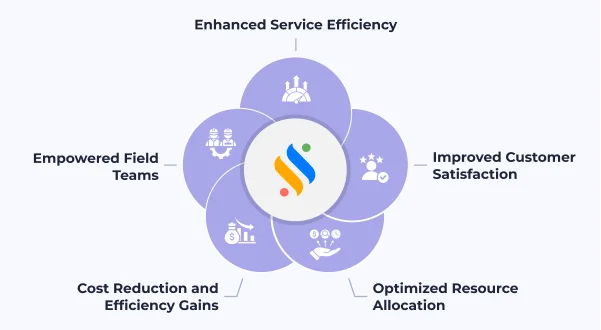
1. Enhanced Service Efficiency
The best field force management solution automates mundane tasks, decreasing any scope of manual errors and saving time. By using features like automated dispatching and instant updates, you can make your operations easy.
2. Improved Customer Satisfaction
When customers get updates on time and customer issues are resolved as specified, the customer feels included and satisfied. This is a result of the best field service management platform that helps field personnel improve communication with clients.
3. Optimized Resource Allocation
With GPS tracking and real-time visibility, the resources can be allocated efficiently, making sure that the right technician is always at the right place. This feature decreases any operational delays and uplifts the productivity of the remote workforce.
4. Cost Reduction and Efficiency Gains
To decrease the pain for administrative executives, automation in scheduling, reporting, and invoicing becomes prominent. It decreases administrative load, decreases overall labour costs, and improves service efficiency, making mobile field service solutions a great asset.
5. Empowered Field Teams
Field technicians can manage task details, update progress, and communicate with back-office staff from their pocket-friendly mobile devices, making the service workflows smoother and providing faster resolutions.
- Mobile Apps: Enable field agents to receive job details, upload reports, and communicate with the team on the go.
- Cloud-Based Platforms: Allow instant sharing of documents, photos, and updates between office and field teams.
- GPS Integration: Provides real-time location tracking for route optimization and better task allocation.
End the daily hustle of your field teams out there!
Help them work smart & quicker with the best FSM tool in the market!
Step-by-Step Process of Implementing Field Service Management Tool

The success of a field service management system lies in its implementation. While adopting FSM tools offers numerous benefits, a structured and thoughtful approach ensures that businesses maximize their investment and minimize disruptions.
Assess Business Needs
- Identify key challenges faced by your field teams, such as communication gaps, scheduling inefficiencies, or poor resource allocation.
- Determine which features of FSM tools align with your goals, such as real-time tracking or integration with HRMS & payroll software.
Choose the Right Solution
- Research and compare FSM solutions based on scalability, integration options, and user-friendliness.
- Consider tools like Super Field Force for advanced capabilities.
Plan the Rollout
- Start with a pilot program to test the solution with a smaller team.
- Gather feedback from the pilot group to address any issues before a full-scale implementation.
Train Your Teams
- Offer hands-on training sessions for both field agents and office staff.
- Ensure users understand how to leverage mobile field service software features like task automation, GPS tracking, and route planning.
Integrate with Existing Systems
- Seamlessly integrate FSM tools with existing platforms like CRM systems, payroll software, and communication tools.
- Avoid data silos by ensuring interoperability across systems.
Monitor and Optimize
- Track key performance metrics, such as task completion rates and response times, after implementation.
- Use built-in analytics to identify areas for improvement and fine-tune operations.
Overcoming Challenges in Field Service Management Implementation
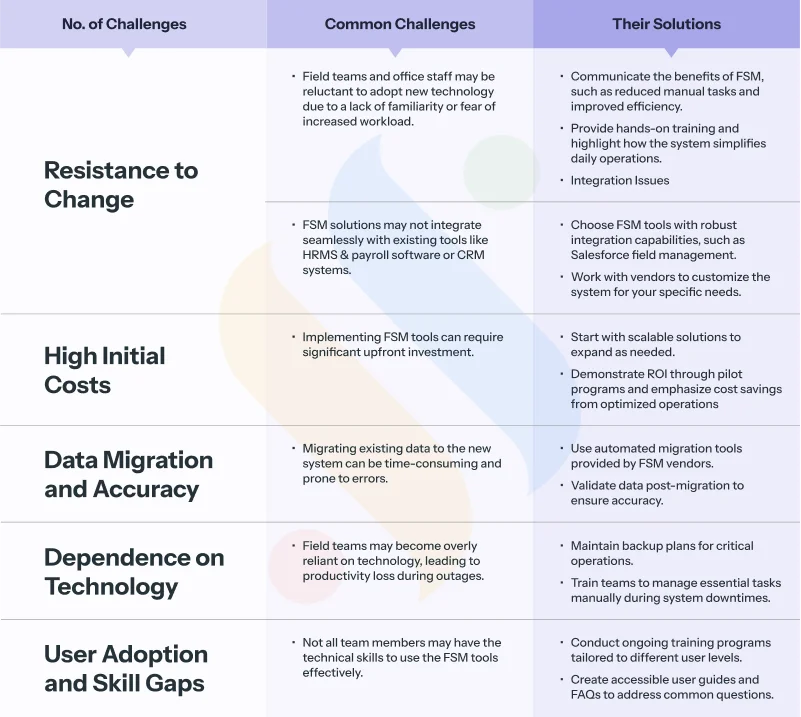
Adopting a field service management system can significantly enhance operations, but like any organizational change, it comes with its own set of challenges. Anticipating and addressing these issues ensures a smoother transition and maximizes the benefits of the system.
Common Challenges and Their Solutions
Resistance to Change
Challenge- 1
Field teams and office staff may be reluctant to adopt new technology due to a lack of familiarity or fear of increased workload.
Solution
- Communicate the benefits of FSM, such as reduced manual tasks and improved efficiency.
- Provide hands-on training and highlight how the system simplifies daily operations.
- Integration Issues
Challenge- 2
FSM solutions may not integrate seamlessly with existing tools like HRMS & payroll software or CRM systems.
Solution
- Choose FSM tools with robust integration capabilities, such as field force management.
- Work with vendors to customize the system for your specific needs.
High Initial Costs
Challenge- 1
Implementing FSM tools can require significant upfront investment.
Solution
- Start with scalable solutions to expand as needed.
- Demonstrate ROI through pilot programs and emphasize cost savings from optimized operations.
Data Migration and Accuracy
Challenge- 2
Migrating existing data to the new system can be time-consuming and prone to errors.
Solution
- Use automated migration tools provided by FSM vendors.
- Validate data post-migration to ensure accuracy.
Dependence on Technology
Challenge- 1
Field teams may become overly reliant on technology, leading to productivity loss during outages.
Solution
- Maintain backup plans for critical operations.
- Train teams to manage essential tasks manually during system downtimes.
User Adoption and Skill Gaps
Challenge- 2
Not all team members may have the technical skills to use the FSM tools effectively.
Solution
- Conduct ongoing training programs tailored to different user levels.
- Create accessible user guides and FAQs to address common questions.
Wrapping Up: Final Thoughts on the Field Service Management
To improve communication & collaboration, you should be ready to take a transformative step and implement a better field force management software at your facility! Because with such an amazing tool, you can easily leverage and achieve real-time updates, better task management, and seamless integration with your already existing systems like HRMS & payroll software, and CRM platforms.
Through this article, we have explored the key features and benefits of FSM, along with practical strategies for implementation. However, if there’s anything else you want to know then you can always connect with our experts, and they will help you with every query regarding field service management and more! So, feel free to connect at your convenience!










