An all-in-one business management solution for all your business needs!
Book a free demo to know more!
Built to scale with your business.
AI-powered solution to automate workflow.
Cost-effective for growing businesses.

An all-in-one business management solution for all your business needs!
Book a free demo to know more!
Your Partner in the entire Employee Life Cycle
From recruitment to retirement manage every stage of employee lifecycle with ease.
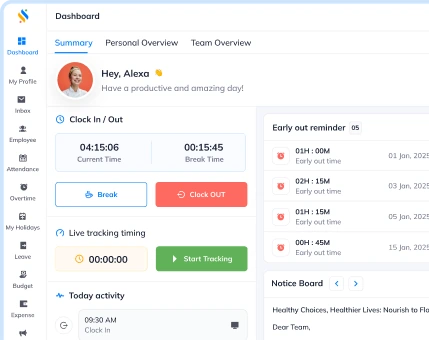
Your Partner in the entire Employee Life Cycle
From recruitment to retirement manage every stage of employee lifecycle with ease.
Sure, here is a structured SEO-friendly content layout for a Head HR role with Key Responsibility Areas (KRA) and Key Performance Indicators (KPI):
—
**Job Title: Head HR**
**Job Description:**
As the Head HR, you will be responsible for overseeing all aspects of human resources management within the organization. Your role involves strategic planning, talent acquisition, employee relations, and ensuring compliance with labor laws and regulations.
—
**Key Responsibility Areas (KRA) & Key Performance Indicators (KPI)**
**1. Talent Acquisition and Recruitment**
– **KRA:** Develop and implement effective recruitment strategies to attract top talent.
– **Short Description:** Lead recruitment efforts to hire skilled professionals.
– **KPIs:**
1. Time-to-fill vacant positions.
2. Quality of hires.
3. Recruitment cost per hire.
4. Employee retention rate post-recruitment.
**2. Employee Engagement and Retention**
– **KRA:** Foster a positive work culture and enhance employee engagement.
– **Short Description:** Promote a work environment that boosts employee morale.
– **KPIs:**
1. Employee satisfaction survey scores.
2. Employee turnover rate.
3. Participation in engagement activities.
4. Training and development participation rate.
*[Continue with a similar structure for the remaining KRAs]*
—
**Real-Time Example of KRA & KPI**
**Example:** Implementing a mentorship program to enhance employee development.
– **KRA:** Facilitating career growth through mentorship opportunities.
– **KPIs:**
1. Mentor-mentee matches completed.
2. Feedback from participants on program effectiveness.
3. Promotion rate of mentees.
4. Increase in employee satisfaction scores related to career development.
Describe how these KPIs led to improved performance and success in the organization.
—
**Key Takeaways**
– **KRA defines what needs to be done**, whereas **KPI measures how well it is done**.
– **KPIs should always be SMART** (Specific, Measurable, Achievable, Relevant, Time-bound).
– **Regular tracking and adjustments** ensure success in the Head HR role.
—
This structured content layout provides a clear, concise, and measurable framework for assessing the performance of a Head HR professional.