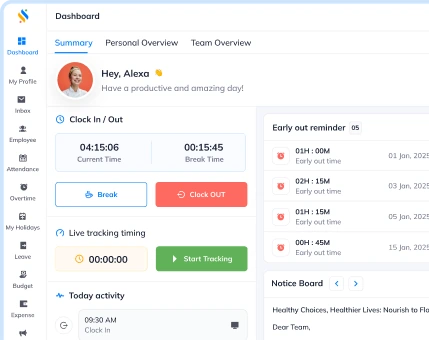
Financial Software Developers play a crucial role in the IT & FinTech industry by creating innovative solutions that drive financial institutions’ success. Mastering this role involves staying updated with market trends, regulatory requirements, and cutting-edge technologies to deliver efficient and secure financial software products. In today’s fast-paced digital landscape, the ability to develop scalable, user-friendly financial software is key to meeting customer demands and staying ahead of the competition.
1. Can you explain the importance of financial software development in the context of digital transformation in the financial industry?
Financial software development is essential for modernizing legacy systems, enhancing operational efficiency, enabling automation, and improving customer experiences.
2. How do you ensure compliance with industry regulations and data security standards when developing financial software?
By following regulatory guidelines such as GDPR, PCI DSS, and implementing security best practices like encryption, access controls, and regular audits.
3. What programming languages and frameworks do you consider essential for developing financial software applications?
Languages like Java, Python, and frameworks such as Spring Boot, Django are commonly used for building scalable and robust financial software applications.
4. How do you approach testing and quality assurance in financial software development to ensure reliability and accuracy?
By implementing automated testing, conducting thorough code reviews, performing regression testing, and leveraging continuous integration and deployment practices.
5. Can you discuss the significance of real-time data processing and analytics in financial software development?
Real-time data processing enables quick decision-making, personalized customer experiences, fraud detection, risk management, and market analysis in financial applications.
6. How do you stay updated with the latest trends and technologies in financial software development?
By attending conferences, participating in online forums, reading industry publications, and experimenting with new tools and frameworks in personal projects.
7. What challenges do you anticipate when integrating financial software with third-party APIs or external systems?
Potential challenges include data compatibility issues, security vulnerabilities, API versioning conflicts, and ensuring seamless communication between systems.
8. How do you prioritize scalability and performance optimization when designing financial software architecture?
By following microservices architecture, utilizing cloud services for scalability, implementing caching mechanisms, and monitoring performance metrics closely.
9. Can you explain the role of DevOps practices in financial software development and deployment?
DevOps practices like continuous integration, continuous delivery, infrastructure as code, and automated testing streamline development workflows, enhance collaboration, and ensure faster time to market.
10. How do you address cybersecurity threats and vulnerabilities in financial software applications?
By conducting security assessments, penetration testing, implementing encryption, role-based access controls, and staying vigilant against emerging cyber threats.
11. Describe your experience with data modeling and database design in the context of financial software development.
Experience with relational databases like MySQL, PostgreSQL, and knowledge of data modeling techniques like normalization, indexing, and optimization are crucial for efficient data storage and retrieval.
12. How do you approach handling large volumes of financial data in real-time processing scenarios?
By leveraging distributed computing frameworks like Apache Kafka, Spark, using in-memory databases, and implementing data partitioning and sharding techniques to manage data efficiently.
13. What strategies do you employ to ensure high availability and disaster recovery in financial software systems?
By implementing redundancy, failover mechanisms, disaster recovery plans, and utilizing cloud services with built-in backup and recovery features.
14. How do you collaborate with cross-functional teams such as business analysts, UX designers, and product managers in financial software development projects?
By maintaining clear communication channels, actively participating in requirements gathering sessions, providing technical insights, and aligning development efforts with business goals.
15. Can you discuss the importance of data encryption and secure communication protocols in financial software applications?
Data encryption ensures sensitive information is protected both at rest and in transit, while secure communication protocols like HTTPS, SSL/TLS safeguard data exchanges between systems.
16. How do you approach performance monitoring and optimization in financial software applications post-deployment?
By using monitoring tools to track key performance indicators, identifying bottlenecks, optimizing code, database queries, and infrastructure resources to improve application performance.
17. What strategies do you employ to ensure regulatory compliance and auditability in financial software systems?
By maintaining detailed audit logs, implementing access controls, encryption, version control, and ensuring data integrity to meet regulatory requirements and facilitate audits.
18. How do you handle version control and code management in collaborative financial software development projects?
By using version control systems like Git, branching strategies, code reviews, and continuous integration tools to manage code changes, track modifications, and ensure code quality.
19. Can you discuss the role of machine learning and AI technologies in enhancing financial software applications?
Machine learning and AI technologies enable predictive analytics, fraud detection, risk assessment, personalized recommendations, and automation of repetitive tasks in financial software applications.
20. How do you address performance bottlenecks and optimize database queries in financial software applications?
By profiling queries, creating appropriate indexes, denormalizing data where necessary, optimizing joins, and utilizing caching mechanisms to improve query performance.
21. Describe your experience with cloud computing platforms and services in the development of financial software applications.
Experience with cloud platforms like AWS, Azure, Google Cloud, and services such as serverless computing, managed databases, and storage solutions is beneficial for scalable and cost-effective deployments.
22. How do you ensure data privacy and confidentiality in financial software applications that handle sensitive customer information?
By implementing data anonymization techniques, role-based access controls, encryption at rest and in transit, and regular security audits to protect customer data privacy.
23. Can you explain the role of API design and documentation in facilitating integrations with external systems in financial software development?
Well-designed APIs with clear documentation, versioning, authentication mechanisms, and error handling ensure seamless integrations, improved developer experience, and scalability in financial software applications.
24. How do you approach system architecture design to ensure modularity, extensibility, and maintainability in financial software projects?
By following SOLID principles, designing modular components, adhering to design patterns, and decoupling dependencies to create scalable, maintainable systems that can evolve with changing requirements.
25. What strategies do you employ to optimize code performance and reduce technical debt in financial software development?
By refactoring code, conducting code reviews, addressing code smells, implementing design patterns, and prioritizing clean, maintainable code to reduce technical debt and improve overall system performance.
26. How do you approach data synchronization and consistency across distributed systems in financial software applications?
By implementing distributed transactions, event-driven architectures, message queues, and compensating transactions to ensure data consistency and synchronization across distributed systems.
27. Can you discuss the impact of blockchain technology on financial software development and its potential applications in the industry?
Blockchain technology offers secure, transparent, and immutable transactions, streamlines processes like payments, smart contracts, and identity verification, and enhances trust in financial transactions.
28. How do you ensure high performance and low latency in real-time trading systems and financial applications?
By optimizing algorithms, using in-memory databases, minimizing network latency, leveraging caching strategies, and implementing efficient data structures to achieve high performance and low latency in real-time systems.
29. Describe your experience with automated deployment pipelines and continuous integration/continuous deployment (CI/CD) in financial software development.
Experience with tools like Jenkins, GitLab CI/CD, Docker, Kubernetes, and practices like automated testing, deployment automation, and monitoring ensures rapid, reliable software delivery in financial projects.
30. How do you handle data migration and system upgrades in financial software projects to minimize downtime and ensure data integrity?
By conducting thorough impact analysis, creating rollback strategies, performing gradual migrations, running parallel systems during upgrades, and extensive testing to minimize disruptions and data loss during migrations.