
What is company culture? This would have been the very first in your mind after reading the headline. And if yes, then congratulations, because just like many HRs in the world, you have come up with the same query.
An organization’s culture shows the complete personality of an organization, like how it has been shaped by its values, beliefs, behaviors & interactions. Because if you look at it, a strong business culture directly impacts employee engagement, employee retention & business success.
Companies with a great company culture experience a happier workforce, higher productivity for many employees, and lower turnover. It helps businesses gain a competitive edge, but the real question comes after that, which is how companies can improve their current culture.
Like What separates a good company culture from a toxic culture, and how actively engaged employees can add personal values to companies with the best work culture! Learn about tangible aspects through the medium of this blog, and further we will help you explain 7 expert insights to help HR managers and team leaders build a healthy culture.
Through the medium of this blog, you can expect to learn these topics listed below:
- Why company culture is important?
- What are the different types of companies’ culture?
- What makes a strong organizational culture?
- How to develop a company culture that helps boost the Performance of Manager & employees?
- Best companies’ culture examples from top organizations
- The best tools to measure and improve companies culture
What Is Company Culture?
Company culture refers to the shared values of happy employees and their beliefs, attitudes, and behaviors that shape how a company operates. It influences not just one but everything from how employees work and interact to how decisions are made.
At its core, a company’s culture is defined by:
- Leadership and management styles
- Company values and mission
- Employee interactions and teamwork
- Workplace culture and policies
- Recognition and reward systems
A strong companies culture is there to help create some sense of unity and purpose within the organization. On the other hand, a toxic culture add only dissatisfaction, high turnover, and much lower and reduced employee engagement.
The Difference Between Company Culture and Corporate Culture
Many people use corporate culture and company culture interchangeably like both of them are same thing. However, they are not, because corporate culture often refers to the overall structure, values, and rules in larger organizations, while other aspects of this term culture in the company is more about day-to-day interactions and behaviors in individual workplaces.
Understanding a company’s existing culture here would be the first step to improving companies culture and building a healthy work environment.
Why is Company Culture Important?
You can just keep listing the importance of organizational culture fit, and the page would end, but not the cruciality of this business culture. Hence, you should understand the importance of organisational culture, because it’s way more than just a buzzword.
When a company has a positive culture, its employees tend to feel more valued, engaged, and motivated to contribute to the company’s overall mission. But at the same time, when there’s a toxic culture in the company, it can lead to high turnover and would gonna leave a negative mark on the company’s environment.
Key Reasons Why Companies Culture Is Important
There’s some reason behind people searching for the best work culture companies in India, they want to why it’s so important, and how top companies are reaching that benchmark! So, let’s start taking one step after another and start reading all the reasons, why a good culture is so important!
Boosts Employee Engagement and Productivity
Companies with best work culture exist to encourage their employees to feel much more engaged in their work. Henceforth, when such people keep aligning with the organization’s values, they will be more productive, innovative, and highly motivated to contribute to company goals.
Increases Employee Retention
A company with a good culture tends to retain top talent much more effectively. Employees working in the company are more likely to stay in an environment where they will consistently feel respected & supported, reducing hiring costs and improving long-term stability.
Attracts Prospective Employees
Today, prospective employees actively research an organization’s existing companies culture before accepting a job offer. A positive culture can be a competitive advantage in hiring top talent who align with the company’s mission and vision.
Encourages Innovation and Risk-Taking
A strong culture in any business can quite efficiently foster creativity & allow their employees to take calculated risks to grow further. In a highly collaborative work environment, employees feel safe sharing ideas, and that too without fear of judgment.
Enhances Employee Satisfaction and Well-being
Employees who’re working in a healthy culture tend to experience much higher employee satisfaction & well-being. And when companies start to promote work-life balance, open communication & professional development opportunities, they create a space where employees thrive.
What are the Types of Company Culture?
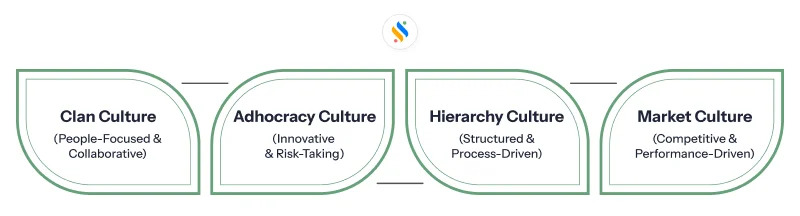
Every company has a unique culture, but most workplaces fall into one or more of these four companies culture types:
1. Clan Culture (People-Focused & Collaborative)
A clan culture emphasizes teamwork, and mutual respect, and also ensures there’s a sense of belonging among the employees. It feels like a close-knit family where all the team members keep supporting one another, these companies focus on employee happiness, mentorship programs & professional growth.
2. Adhocracy Culture (Innovative & Risk-Taking)
An adhocracy culture keeps focusing on innovation, creativity & risk-taking. These kinds of companies encourage employees to feel empowered to keep trying new ideas always without having any fear of failure. They focus on market culture, agility & business success through experimentation.
3. Hierarchy Culture (Structured & Process-Driven)
A hierarchy culture follows a structured, rule-based, and process-driven approach. It prioritizes stability, efficiency, and well-defined company values. While this hierarchical culture ensures smooth operations, it may limit flexibility.
4. Market Culture (Competitive & Performance-Driven)
A market culture focuses on achieving business success through competition and measurable goals. These organizations value high performance, financial rewards, and customer satisfaction. Employees in this culture thrive under pressure and competition.
What Makes a Good Company Culture?
A positive companies culture is always there to create a positive work environment where their employees keep feeling valued, engaged & motivated. This way, it keeps fostering a sense of belonging, promotes mutual respect & aligns with the organization’s values. But what truly makes a strong culture? Let’s have a look at them;
Key Elements of a Good Company Culture
- Clear Core Values & Mission: A company’s core values are there to define its identity, and a strong organizational culture is built around a clear mission that employees understand & believe in.
- Open Communication & Transparency: Organizations with a healthy culture keep promoting open communication between team members & leadership, employees should feel comfortable sharing feedback without fear.
- Employee Recognition & Rewards: Celebrating employee accomplishments fosters a positive culture & boosts employee happiness, so, whether through financial rewards, promotions, or shoutouts, recognizing contributions keeps morale high.
- Work-Life Balance & Well-being: A good culture keeps supporting a good work-life balance as it keeps allowing flexible schedules, mental health support & wellness programs.
- Opportunities for Professional Development: Investing in continuing education, mentorship programs, and professional development opportunities helps employees grow. This also increases employee engagement and business success.
- Diversity, Equity, and Inclusion: A great companies culture embraces shared values of diversity and inclusion. Employees should feel welcomed and respected, regardless of their background.
- Employee Input & Collaboration: Companies that encourage employee surveys, focus groups, and team collaboration create a highly collaborative work environment where everyone has a voice.
- Strong Leadership & Trust: Company leaders play a crucial role in shaping culture. A company with a strong company culture has leadership that leads by example and prioritizes employee well-being.

7 Expert Insights To Improve Company Culture
A great culture doesn’t happen overnight, just like any HRMS payroll software in India can’t upgrade the whole company’s finance overnight, it requires time, right? Hence, what it will require are intentional efforts from company leaders, and HR professionals, and not to forget the employees.
So, collected from the industry leaders, here are the 7 expert insights that can help you improve culture to build a healthy work environment.
1. Define and Communicate Core Values
A company’s core values are the foundation of its organizational culture. Clearly defining and consistently communicating these values ensures that employees understand what the company stands for.
Tip: Embed values in daily operations, hiring decisions, and performance evaluations.
2. Foster Open Communication and Transparency
Employees should feel safe sharing ideas, concerns, and feedback. Organizations with open communication create an environment where employees feel heard and respected.
Tip: Conduct employee surveys, host regular meetings, and encourage two-way communication between team members and leadership.
3. Recognize and Reward Employees
Recognition is a key to a positive culture and the first step to an organization’s success. Hence, employees who feel valued are more engaged, leading to higher employee satisfaction and employee retention.
Tip: Implement a structured recognition system—public shoutouts, bonuses, or financial rewards based on performance.
4. Encourage Work-Life Balance
Burnout can easily destroy even the best organizational culture, so companies should keep this in mind, to keep supporting work-life balance and create happier, more productive employees.
Tip: Offer flexible work schedules, mental health resources, and well-being programs.
5. Invest in Professional Development
Ensuring professional development opportunities always helps employees to grow within their company. And this phenomenon keeps increasing employee engagement & reducing turnover.
Tip: Support mentorship programs, skill-building workshops, and tuition reimbursement for continuing education.
6. Promote Diversity and Inclusion
A strong organizational culture is always there to value mutual respect & creates a sense of belonging not just for one but everyone. Hence, a diverse workplace keeps fostering innovation & strengthens employee interactions.
Tip: Implement DEI initiatives, ensure fair hiring practices, and encourage cross-functional collaboration.
7. Regularly Assess and Improve Culture
A company’s existing culture should keep evolving with its workforce & business goals. And there’s always should be regular assessments because it help in identifying what’s working in the favor of the company and what needs improvement.
Tip: Use employee surveys, focus groups, and performance management tool to track cultural health and make data-driven improvements.
How to Develop Company Culture?
Developing a strong organizational culture requires intentional effort & alignment between leadership, employees, & the company’s core values. A well-defined culture is not there to only improve employee engagement but also serves as a competitive advantage in attracting & retaining top talent.
Step 1: Define the Organization’s Core Values and Mission
Your organization’s values serve as the foundation of its culture because these values should align with the company’s mission & guide each & every decision, from hiring to leadership strategies.
How to implement it?
- Conduct brainstorming sessions with your company leaders & employees to define key values.
- Ensure values reflect the company’s goals & vision for the future.
- Communicate these values across all levels of the company.
Step 2: Hire Employees Who Align with Company Culture
A good culture is and always starts with the right people, so always hire employees who are naturally fit as per the existing companies culture, because it helps in maintaining & strengthening organizational values.
How to implement it?
- Include cultural fit questions in interviews.
- Showcase the company’s corporate culture during recruitment.
- Encourage referrals from employees who already thrive in the workplace.
Step 3: Train Leaders to Set the Right Example
Company culture management is largely influenced by leadership. Company leaders must carry the company’s values & demonstrate them in their almost everyday decisions & actions.
How to implement it?
- Provide leadership training on emotional intelligence and open communication.
- Hold managers accountable for fostering a positive work environment.
- Encourage transparency and trust between leadership and employees.
Step 4: Encourage Employee Input and Involvement
A strong organizational culture can only be built with employees, not just for them. So, start involving employees in decision-making, because it will help you increase employee satisfaction & will create a sense of belonging.
How to implement it?
- Conduct regular employee surveys to gauge cultural health.
- Use focus groups to discuss cultural challenges and improvements.
- Create an open-door policy where employees feel comfortable sharing ideas.
Step 5: Recognize and Reward Cultural Contributions
Celebrating employees who embody company values reinforces a positive culture and motivates others to do the same.
How to implement it?
- Create employee accomplishments awards tied to company values.
- Use peer-to-peer recognition platforms.
- Offer financial rewards for employees who contribute positively to workplace culture.
Step 6: Foster Work-Life Balance and Employee Well-Being
A toxic companies culture often results from burnout and overworking employees. Supporting work-life balance leads to higher employee happiness and productivity.
How to implement it?
- Provide flexible work options like remote work or hybrid schedules.
- Offer wellness programs, mental health support, and fitness incentives.
- Respect personal time by discouraging after-hours communication.
Step 7: Continuously Assess and Adapt Company Culture
Culture is not static—it must evolve with the company’s growth and workforce needs. Regular assessments help organizations identify what’s working and where improvements are needed.
How to implement it?
- Use performance management tools to track cultural engagement.
- Conduct annual culture audits to ensure alignment with company values.
- Act on employee feedback to refine policies and the work environment.
Best Company Culture Examples
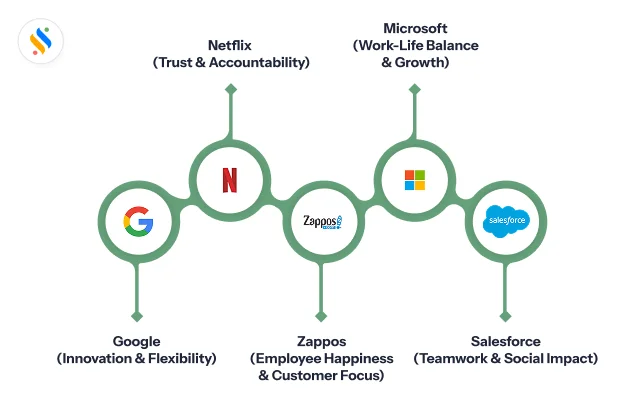
Some companies have mastered the art of creating a strong culture that drives employee engagement, innovation, and success. Here are a few standout examples:
1. Google – Innovation & Flexibility
Google’s innovative culture encourages risk-taking and creativity. Employees get 20% of their time to work on personal projects, leading to groundbreaking ideas.
Key Takeaway: Empower employees to experiment and innovate.
2. Netflix – Trust & Accountability
Netflix thrives on a freedom and responsibility model, giving employees autonomy while expecting a high-performance management strategy. There’s no micromanagement, only trust.
Key Takeaway: Give employees ownership over their work.
3. Zappos – Employee Happiness & Customer Focus
Zappos prioritizes a fun, service-driven culture where employees enjoy their work. New hires even get $2,000 to quit if they don’t feel aligned with the company values.
Key Takeaway: Build a culture where employees genuinely want to stay.
4. Microsoft – Work-Life Balance & Growth
Microsoft fosters work-life balance with flexible schedules and professional development opportunities to keep employees engaged and growing.
Key Takeaway: Support employee well-being and career growth.
5. Salesforce – Teamwork & Social Impact
Salesforce’s “Ohana” culture emphasizes collaboration and giving back, offering employees paid volunteer hours and a strong sense of community.
Key Takeaway: A great culture extends beyond the office—it should have a meaningful impact.
Best Tool To Improve Company Culture
Building a strong organizational culture would require the right strategies, but having the right tools on your side can make the process much easier. Henceforth, HR managers & team leaders need an efficient system to enhance employee engagement, streamline HR tasks, & create a positive work environment.
One of the most effective ways to improve an organizational culture is by using an all-in-one HR management solution that helps with:
- Boosting Employee Productivity – Once you have started to automate tasks like attendance tracking, performance management, & payroll then your employees can easily focus on meaningful work.
- Enhancing Employee Experience – A centralized system like many HRMS payroll software in India can ensure communication, feedback & recognition through which the employees can feel valued & engaged.
- Reducing HR Workload – Managing recruitment, payroll & compliance becomes effortless with an intuitive HRMS platform.
- Encouraging Open Communication & Collaboration – Having a system that fosters real-time feedback and transparency strengthens workplace culture.
Looking for the best tool to transform your companies culture? Because if you’re then like many businesses, you can start using Superworks. Because it is a highly advanced HRMS software that simplifies HR processes & keeps helping organizations build a healthy & productive work environment.
For more details, visit superworks.com and see how it can elevate your workplace culture.
Conclusion
A strong organizational culture is way more than just office perks—because it defines how a business operates, treats its employees & achieves long-term business success. When employees align with the organization’s values, they starts to experience much higher job satisfaction, better engagement, and finer productivity.
And once you have started to implement these 7 expert insights, you as a business can get all the help to improve culture by fostering mutual respect, open communication & work-life balance. Because companies like Google, Netflix, and Zappos have are already doing doing that, and have set some of the finest examples, that shows a positive culture of human resource performance always leads to employee happiness & retention.
However, culture development isn’t a one-time effort – it requires continuous improvement, leadership & commitment. Henceforth, you can get more details in our completely free company culture E-book. So start investing in your organizational culture today—because at the end of the day, it is the key to attracting top talent, employee well-being & long-term growth.










