Ever feel like,
“I want to know what my employees are doing. But why is it difficult?”
Well, that’s a problem that every small business owner asks themselves.
You want to know your team’s productivity? It’ll feel like trying to catch smoke with your bare hands.
And then your HR manager tells you, “Sir, we should use employee monitoring software.”
Great!!!
Another tool, as if your life wasn’t complicated enough already.
But here’s the thing: this isn’t about spying on your team every second.
YES!!! It’s not about that.
Curious?
This blog will unpack why small businesses are slowly (but surely) realizing that monitoring isn’t scary. It’s just smart.
What are some of the biggest employee monitoring challenges small businesses face?
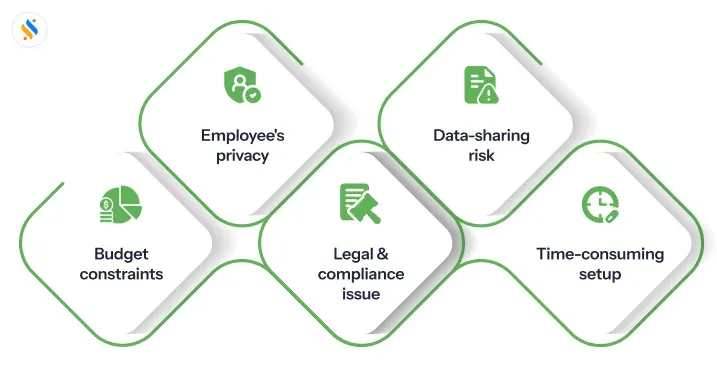
These are reasons that affect their decision to implement employee monitoring software:
Budget constraints:
This is usually the first wall small businesses hit. They want to track productivity, but they start to get uncomfortable the moment they hear pricing plans. Monthly costs, per-user pricing, setup fees… it all adds up fast.
And when you’re already managing salaries, rent, tools, and miscellaneous expenses, employee monitoring software starts feeling like a “nice to have” instead of a “need to have.”
Interference in employees’ privacy:
Let’s be honest- most employees hear “monitoring” and immediately think spying. Even if the intent is better productivity or fair evaluations, it doesn’t land that way at first. There’s fear of being watched every second, fear of micromanagement, and fear of intrusion of privacy.
Small teams especially struggle here because relationships are personal, so introducing monitoring can feel awkward, almost like saying, “I don’t trust you.”
Legal & compliance uncertainty:
This is the silent fear nobody likes to talk about. “Are we even allowed to track this?” “Do we need employee consent?” “What about data storage?” Laws vary, including local labor laws. Small businesses don’t usually have legal advisors on speed dial, so they hesitate.
Risk of data sharing:
Monitoring software, no matter what its capabilities are, won’t work unless it has the data. After, how do you expect to give you records of activity logs, screenshots, and application usage if it won’t have data. And for small businesses, this raises an important question: how securely is that data being handled? But the issue here isn’t just about collecting or sharing data, but also about protecting it. A security breach, unauthorized access, or poor data management can expose sensitive employee and business information.
Time-consuming setup:
This part doesn’t get talked about enough, honestly. Small businesses already run on limited time, so when the software setup itself feels like a mini-project, it becomes a turn-off. Installing apps, setting rules, configuring dashboards, onboarding employees, explaining how it works… It all takes time that someone has to give.
Employee monitoring software: Explained!
Basically, employee monitoring software is an advanced tool that businesses use to keep an eye on how work is actually getting done.
It tracks work hours, apps and websites used, time spent on tasks, and activity levels to spot work patterns. Like where time is going, what’s slowing people down, or if someone is overloaded while someone else is sitting idle.
A lot of teams use it because work is no longer happening in one office. People are remote, hybrid, using different tools, different schedules. Managers can’t just “see” work anymore, so this software fills that gap.
That said, it’s not meant to spy (even though it sounds like that at first). When used properly, it helps with productivity, fair performance reviews, accurate payroll, and even burnout prevention. When used badly… yeah, you can face serious issues.
Key functions of Employee monitoring software for small businesses
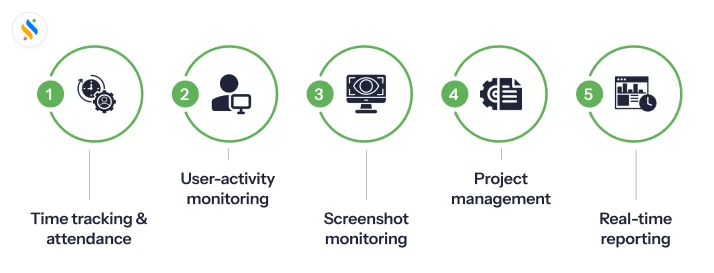
This gives you insights into what the software offers you.
Time tracking & attendance management:
So basically, this is the part that just keeps track of when people start work, when they leave, and how long they’ve actually been active. Employee time tracking software for small businesses auto-updates everything, which is a lifesaver for small teams who don’t have time to micromanage or check attendance manually every day.
User-activity monitoring:
This one is like a behind-the-scenes check on what tools or apps employees are using. Not in a creepy way, but more like, “Okay, they’re working on this software for this much time.” It helps you understand where time is going, especially if someone gets stuck in unproductive loops or tabs (we all do that). This is actually one of the reasons small businesses are opting for employee monitoring software that can detect web activity in real time.
Screen recording/screenshot:
Alright, this sounds intense, but it’s actually just taking periodic screenshots or recording short bits of what’s happening on the screen. It’s mainly for transparency, not spying. Super helpful if you want proof of work or need to double-check why a task took forever. And for remote teams, it just gives a little peace of mind.
Project management:
This ties the whole thing together. It lets you see who’s doing what, what deadline is coming up, and whether a project is actually moving or just… stuck. For small businesses, this is gold because nobody has time to run around asking for updates 10 times a day. Everything sits in one place, which is honestly a relief.
Real-time productivity reporting:
It’s like getting mini updates all day. Showing what’s working, what’s stuck, and who needs help – saving small businesses a lot of time. You don’t have to dig for information; it just shows up.
Start managing your team smartly
See real activity insights that help you make faster, better decisions.
Why is employee monitoring important for small businesses?
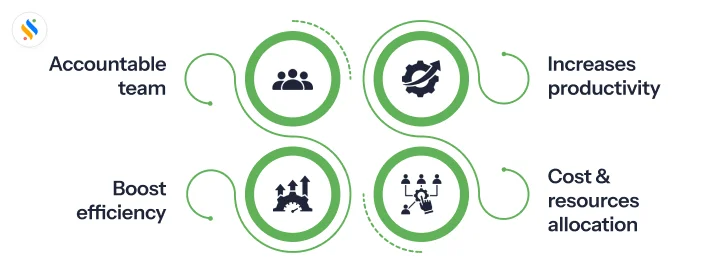
Let’s take a look at the employee monitoring software pros that can benefit small-scale businesses immensely:
Help teams to stay productive:
Boosting employee productivity is the paramount job of this software. Monitoring gives small teams visibility into work progress, keeps everyone aware of their time, and helps things move without constant follow-ups.
Optimizes costs & resources allocation:
For small businesses, every hour matters. Monitoring shows where time is really going, so you cut waste and focus resources on what actually delivers results.
Boosts the overall efficiency:
Things get messy fast in smaller teams. Monitoring helps spot delays early, giving clarity on daily work so teams can adjust fast and avoid chaos.
Make teams more accountable:
When people know their work pattern is visible, they naturally tend to be a bit more responsible with their time. Not in a “boss is watching us” way. Just a basic sense of accountability. It reduces situations where tasks are forgotten, or nobody knows who was supposed to do something. Everyone just becomes a little more conscious about completing what they’re assigned.
Enhances security:
Small businesses don’t always have the luxury of a full IT security squad. Monitoring helps you keep an eye out for anything bizarre, like suspicious logins or someone accessing stuff they shouldn’t. It also helps prevent data leaks because you know exactly what’s happening on work devices. It’s basically an extra layer of protection without needing a huge budget.
Best solution for remote & hybrid team management:
Managing people who aren’t in the same office can get confusing pretty fast. You don’t know if someone is stuck on a task or if they’re even online. Monitoring tools take the guesswork out of it. You can see the progress happening in real-time, and remote employees don’t feel the need to constantly explain what they’re doing. It keeps everything aligned even if everybody’s scattered across locations.
What do small businesses look for in employee monitoring software?
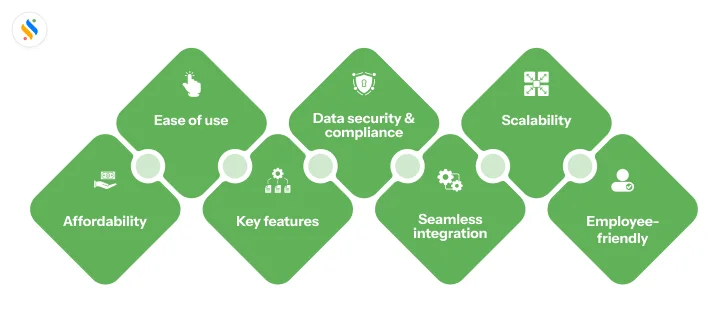
There are certain things that small-scale business owners can keep in mind when it comes to choosing the best employee monitoring software. Let’s take a look at them.
Affordability:
Small businesses usually don’t have tons of cash lying around, and because of that, pricey employee monitoring software is a big no for them. Now, from the outside, it can look like a challenge. But actually it isn’t. The reason for that there are so many employee tracking software that are available without needing to drain their money. The bottom line is – affordability is a keyword.
Ease of use:
If you are a manager, chances are that you won’t appreciate that your team is putting in hours understanding the employee monitoring systems. And if you are a small-scale business owner, then it should be a deal-breaker. That’s why it’s best to look for an employee monitoring tool that isn’t complex in nature. Where over 50% of the things, including reporting & analytics, are available on the dashboard. Also, the integration should be seamless.
Key features:
Some of the most common features of an employee monitoring software include activity tracking, productivity tracking, automated time tracking, application monitoring, idle time tracking, website and app usage, keystroke logging, and detailed reports. Now, as said, they are common features. You need to ensure that the software you are going for has the features that you want. For instance, to track the remote workforce, it needs to have a remote employee monitoring feature.
Data security & compliance:
If you are someone who believes that data breaches only happen in big enterprises, then you are mistaken. Even small businesses can get into trouble if their sensitive data gets into hands. That’s why the software must have features like behavior analytics. The benefit of this will be that whenever any unauthorized access takes place, especially insider threats, the manager will get alerts immediately.
Smooth integration:
Put yourself in the shoes of a small-scale business owner. Would you like to have a monitoring tool that takes a great deal of time to integrate with your existing workflow? Probably no. That’s why it’s ideal to have an employee monitoring system that integrates a payroll processing system, a project management system, and an HR system. This way, you will be able to avoid headaches, and your workflow will also remain efficient without any disruptions.
Scalable:
Just because the business is small now doesn’t mean it will stay that way. Team members will begin to increase, and with them, their data. It would be a losing deal if you get a tool to monitor employees’ activity, and now you have to change it because your team has grown from 40 to 55. Therefore, you need an employee monitoring system that not simply track employees’ performances. It should be scalable in nature, too!
Employee-friendly:
Employee monitoring is tricky. No individual employee likes to be called unproductive, especially without data. This can lead to trouble. The purpose of employee monitoring software is to measure and boost productivity. It’s not just about tracking employee computers. It’s about understanding what they are doing and where their time is going. Hence, you need to ensure that your small business monitoring software doesn’t comes across as a tool for spying.
Conclusion
Employee monitoring for small businesses is all about ensuring that things work smoothly for them. Of course, there are challenges. But if you can choose wisely, it can actually feel like a helper instead of a headache. Superworks, the best HRMS & payroll software in India, is perfect for that. It’s easy to use, doesn’t break the bank, and gives you a clear picture of how work is moving without making everyone feel watched. So, book a demo and see how it can make your small business life way easier.










