Imagine this scenario: you, as a customer, have asked for an electrician for some corrections to the electrical instrument, and they look tired and inefficient. So, would you care to accept their assistance in such a state, or will you question their efficiency? Because after all, it’s about ensuring the customer experience.
Such a state of field employees is because of employee split shift scheduling…
Managing team hours during peak and slow periods is your daily headache if you’re a Field Service Manager or IT Manager. Split shifts can help, especially when work demand comes in waves, like facility maintenance before office hours or IT monitoring during the evening shift.
Such poorly managed shift scheduling leaves the entire team in between the juggling long gaps & keeps adding odd hours without burning out your team. And it can only bring big benefits—when done right.
Henceforth, in this post, we’re gonna break down all these crucial points which are…
- How split shifts work,
- What employees think,
- What the pros and cons really look like from both ends, and
- Split shift FAQs.
Furthermore, you’ll also get to know strategies for managing split shifts, reducing labor costs, and keeping things legal—because yes, split shift rules do exist.
So, let’s dive in.
What is Employee Split Shift Scheduling?
Employee split shift scheduling divides a single workday into two or more segments separated by unpaid breaks longer than a standard hour lunch break. For example, an employee might work within the traditional working hours of 7 AM–2 PM, take a long break, and return for a dinner shift from 2 PM–9 PM.
This approach is designed to align staff availability with peak business hours while avoiding peak and slow periods businesses where labor costs outweigh productivity.
Employee split shift scheduling is common in industries with fluctuating demand, such as hospitality, healthcare, retail & field service management. However, they just have to comply with local and federal laws, including minimum wage requirements.
After understanding all this split shift arrangement, let’s understand how split shifts can help handle global remote teams businesses.
How do Split Shifts Work?
A valid split shift typically includes:
- Two or more shifts in one day.
- Unpaid gaps lasting at least two hours (varies by region).
- Compliance with split shift rules (e.g., meal breaks, overtime pay).
Example of a Split Shift Schedule:
- Morning Segment: 6 AM–10 AM
- Extended Break: 10 AM–3 PM (unpaid)
- Evening Shift: 3 PM–7 PM
This shift pattern in the employee split shift scheduling allows businesses to staff peak periods (e.g., breakfast and dinner rushes) without paying for slow periods (midday lulls). However, every employer must ensure that split shift hours never violate local minimum wage laws.
For instance, different shift patterns require a split shift allowance if the gap between shifts exceeds a certain threshold. Tools like field force management software simplify creating complex split shift schedules while automating compliance with regulations.
Still stuck with spreadsheets & manual split shift scheduling?
Automate your split shift schedule & save hours each week.
Employees’ Perspective on Split Shift Scheduling
After getting an understanding of how this employee split shift scheduling works, let’s read the 7 pros and cons of this process. Because just like any other process, this one too comes with its each set of benefits and minus points.
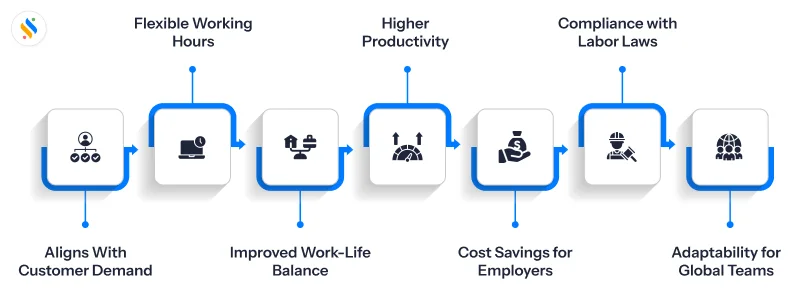
7 Powerful Pros of Split Shifts
1. Aligns With Customer Demand
Split shifts let businesses deploy staff during peak business hours and reduce labor costs during slow periods. For example, a café can schedule split shift employees for the morning coffee rush and evening dessert crowd.
2. Flexible Working Hours
Employees gain control over their day with flexible schedules. A parent might use the long break to drop kids at school or attend appointments.
3. Improved Work-Life Balance
Workers can avoid traffic by splitting commutes or pursuing side hustles during gaps, fostering a better work-life balance.
4. Higher Productivity
Shorter, focused shifts prevent burnout from long working hours. Employees return refreshed after a significant break, boosting efficiency.
5. Cost Savings for Employers
Employers avoid paying for idle time during slow periods and reduce overtime by spreading hours across separate shifts.
6. Compliance with Labor Laws
Tools automate shift scheduling to meet national laws and local mandates like meal breaks or split shift premiums.
7. Adaptability for Global Teams
As per the workforce management tips, global remote teams can use split shifts to cover time zones without requiring strict workday hours.
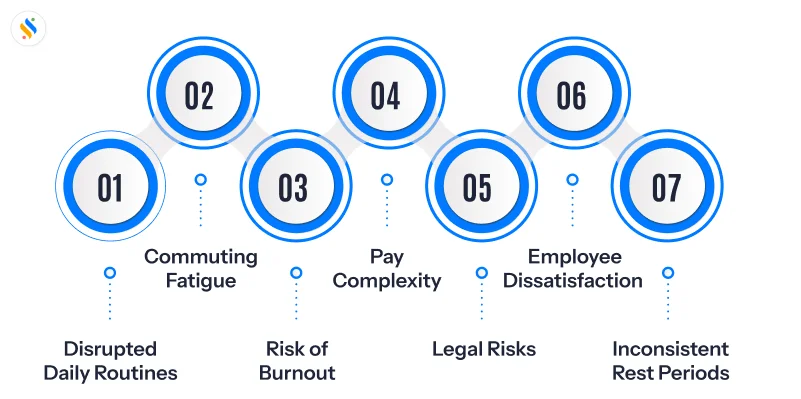
7 Honest Cons of Split Shifts
1. Disrupted Daily Routines
Split shift hours fragment the day, making it harder to plan family time or hobbies.
2. Commuting Fatigue
Traveling to work twice daily increases costs and stress, especially in in-person office environments.
3. Risk of Burnout
The employee’s workday technically spans 12+ hours, even with breaks, leading to mental exhaustion.
4. Pay Complexity
Calculating split shift allowance, overtime, and premiums (e.g., minimum wage rate adjustments) complicates payroll.
5. Legal Risks
Misclassifying hours or ignoring split Shift roster rules can result in penalties under federal laws or local minimum wage statutes.
6. Employee Dissatisfaction
Workers may resent losing hours during breaks or feel undervalued if employee preferences are ignored.
7. Inconsistent Rest Periods
A long break isn’t always restful if employees juggle chores or caregiving.
5 Strategies for Employees to Manage Split Shifts
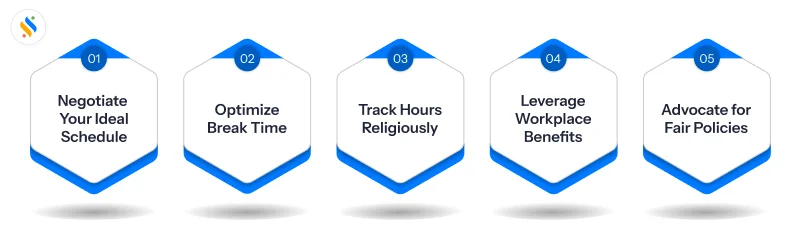
Here, in this section, let us share some of the finest tips for managing split shifts that can help you improve your employee split shift scheduling.
1. Negotiate Your Ideal Schedule
Share employee preferences with managers. For example, request a work schedule and shifts closer together to minimize commute time.
2. Optimize Break Time
Use unpaid gaps for rest, not errands. The importance of time management here ensures you recharge adequately.
3. Track Hours Religiously
Use employee shift scheduler apps to monitor each employee’s working hours and ensure fair pay, including split shift premiums.
4. Leverage Workplace Benefits
If your employer offers a split shift allowance, use it to offset commuting or childcare costs.
5. Advocate for Fair Policies
Push for compliance with split shift rules and keep avoiding last-minute changes as per the finest workforce management tips.
Tips for Employers: Implementing Split Shifts Successfully
- Use Workforce Management Software: Tools like field force management software automate scheduling, track labour costs, and ensure compliance.
- Communicate Clearly: An employee split shift scheduling is there to provide advance notice for employee schedules to reduce stress.
- Offer Incentives: Compensate for inconvenience with split shift premiums or bonuses.
- Respect Employee Boundaries: Avoid complex split shift schedules that stretch the employee’s workday beyond 8–10 hours.
- Monitor Local Laws: Stay updated on local minimum wage rates and split shift rules to avoid violations.
Parting Thoughts,
Employee split shift scheduling offers a pragmatic solution that can balance their customer demand & labor costs, but to be honest, it’s a double-edged sword. While businesses keep benefiting from staffing peak periods efficiently, employees often have to struggle with work-life balance challenges.
Success hinges on transparency, fair compensation (which includes split shift premiums), and various tools like workforce management software to streamline scheduling. For various industries like facility maintenance or retail, where field service response time is critical, split shifts can literally be a game-changer for businesses, only if implemented thoughtfully.
And once those businesses have learned to prioritize employee satisfaction by adhering to local & national laws, they can harness the benefits of split shifts without compromising team morale.