TL; DR
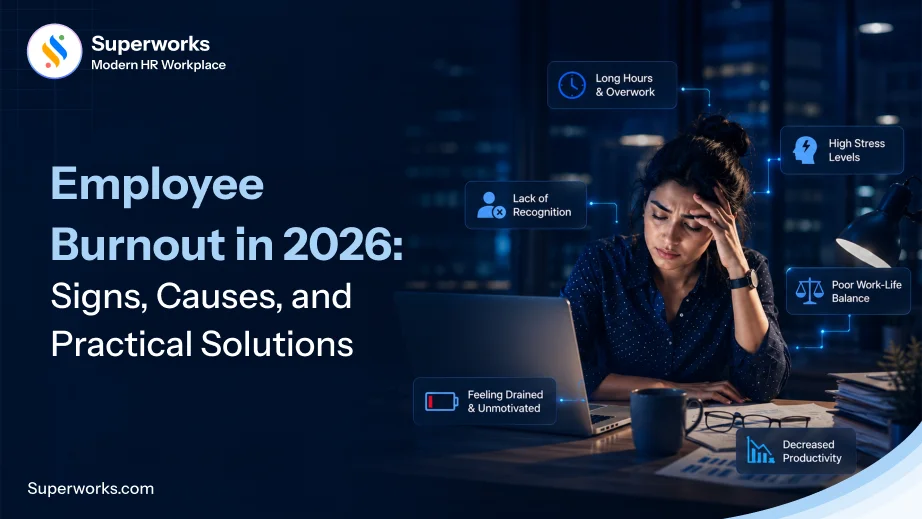
Employee burnout is a workplace problem, not an employee’s own problem. In 2025, the US experienced the worst case of burnout where every 3 in 4 employees. It might come across as signals that can easily be ignored, but the problem starts to happen when managers actually start to ignore it. This guide breaks down what employee burnout looks like and gives you insights into what you can do to manage it.
Ask any manager what behavioural change they have witnessed in their employees.
Most probably, they will say that “they may look tired, but that’s because they are busy, nothing serious.”
But this attitude is one of the underlying causes that creates employee burnout.
Every manager loves it when they are busy. After all, it is their dedication that will play a key role in the growth of the organization.
The problem begins the moment managers start to consider it as “hard work” and not a problem.
In 2026, it’s no longer an irrelevant HR concern. The WHO classifies it as an occupational phenomenon. It’s not a diagnosis for the individual. It’s a diagnosis for the workplace.
This guide covers everything regarding employee burnout, from what it is to what employers and employees can actually do about it; you will get everything here.
What is employee burnout, really?
Employee burnout is a state of physical, mental, and emotional exhaustion caused by prolonged, unmanaged workplace stress. It builds slowly. This happens when, from the organization side or the employees’ side, the employees start taking on more work than they can handle. They console themselves, thinking it’s temporary. Slowly, this converts into employee burnout.
Types of employees burnout
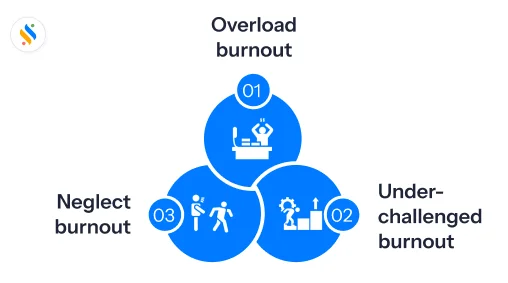
Not every burned-out employee looks the same. Recognizing which type you’re dealing with changes how you respond.
Overload burnout:
This happens when employees consistently push past their limits. It’s the most visible type of burnout, and the one most workplaces associate with the word.
Under-challenged burnout:
It shows up when employees are bored, unstimulated, or stuck doing work that doesn’t use their skills.
Neglect burnout:
This develops when employees feel unsupported, overlooked, or invisible to their managers and peers.
Signs and symptoms of employee burnout
Employee burnout signs typically fall into two buckets: physical and psychological. Most employees show a mix of both well before they say anything to their manager — which is exactly why waiting for someone to speak up is a losing strategy.
Physical signs of burnout in employees
The body usually signals distress before the mind admits it. Watch for these signals:
- Extreme tiredness
- Body soreness
- Headaches
- Chest or stomach issues
- Weak immune system
- Insomnia
- Waking up exhausted
- Eating habits
- Substance use
Psychological symptoms of employee burnout
On the mental and emotional side, look for these signals:
- Chronic fatigue
- Dread of work
- Frustration
- Emotional numbness
- Workplace alienation
- Social isolation
- Impaired concentration
- Decision fatigue
- Severe procrastination
- Intense self-doubt
Burnout doesn't start overnight. Neither should prevention!
Spot workload imbalances, excessive overtime, and early signs before they turn into burnout.

What causes employee burnout?
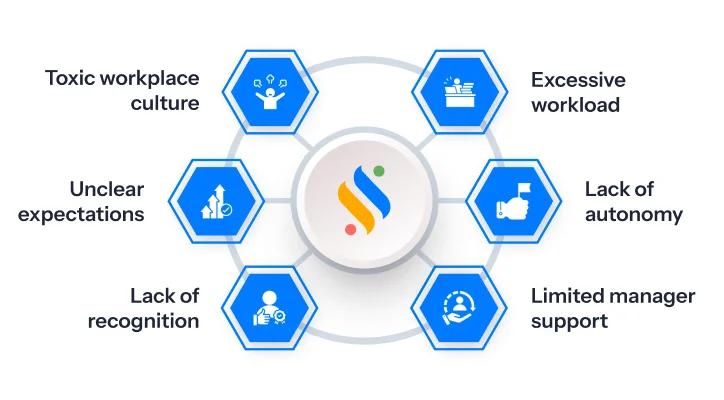
Burnout rarely comes from one bad week. It is the small and slow accumulation of several factors:
Excessive, unrealistic workload:
When the volume of work consistently outpaces the hours available to do it, employees end up borrowing from evenings, weekends, and their own rest to keep up.
Lack of control over how work gets done:
Employees who have little say in how they approach their tasks, set priorities, or manage their schedule tend to feel micromanaged and powerless — even if the workload itself is manageable. That loss of autonomy accelerates exhaustion.
Not enough support from managers or peers:
Burnout rapidly escalates the moment an employee starts to feel like they’ve to solve all the problems alone. Without a manager who checks in or a team that shares the load, even routine challenges seem to be overwhelming.
Little to no recognition for efforts:
Employees who consistently put in the work but never hear about it start to disengage. Recognition isn’t just a morale booster — its absence is one of the clearest predictors of neglect burnout.
Unclear expectations and shifting priorities:
When goals change without warning or instructions are vague, employees keep on guessing what exactly they have to do. This can be mentally exhausting, even when the actual workload doesn’t appear to be heavy.
A toxic workplace culture:
Poor communication, office politics, and a lack of psychological safety are some of the toxic traits that indirectly create burnout in workers.
Why businesses should take employee burnout seriously?
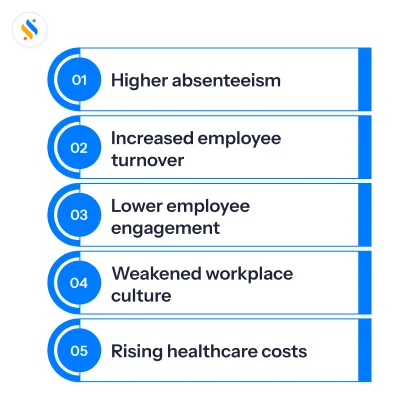
Burnout doesn’t stay a personal problem. It becomes an organizational one, pretty quickly.
Absenteeism climbs:
As exhaustion sets in, employees start missing work more often, usually citing vague reasons like sick leave. It disrupts workflows and quietly shifts extra pressure onto the colleagues covering for them.
Turnover goes up:
Burned-out employees are far more likely to be actively looking for another job. This can be a losing deal for a business because replacing an employee.
Engagement drops:
A burned-out employee does the bare minimum. It is not because they don’t care. It is because they don’t have the same drive that they had earlier.
Culture erodes:
When burnout is normalized and unaddressed long enough, it quietly becomes “how things are here” — and that’s much harder to reverse than to prevent.
Health costs rise:
Sustained stress contributes to real physical and mental health issues — anxiety, high blood pressure, weakened immunity — which shows up eventually in higher healthcare claims and lost productive hours.
Employee burnout solutions
For employers
Prevention beats intervention every time. Here’s where to start:
Build a genuinely supportive culture:
Recognition, providing safety, and a sense of belonging play a key role in reducing employee burnout.
Manage workloads deliberately:
Don’t wait for someone to say they’re drowning. Redistribute work proactively when you see the signs.
Protect work-life balance:
Discourage after-hours emails and normalize employees actually using their leave.
Invest in real engagement, not just perks:
Wellness programs alone won’t get the job done. Organizing yoga and meditation camps, offering gym memberships, or an advanced plan for a meditation app are not capable of reducing burnout.
Train managers to spot it early:
Managers influence team engagement more than almost any other factor. An untrained manager can miss — or worse, dismiss — the early signs of burnout in their own team.
Use data, not guesswork:
Get employee monitoring software for your business. It will add real value, as instead of relying on employees to self-report exhaustion, this tool will surface workload patterns, overtime trends, and activity dips, so that managers can take prompt action.
For employees
Employers can’t fix burnout alone. Employees have to play a role too:
- Set real work hours and stop checking email or taking office calls once you are done.
- Learn to say no the moment excessive work starts to pile up.
- Take real breaks during your work.
- Treat health as a non-negotiable aspect of your career.
- Ask for help before things go out of hand.
How does employee monitoring software help you catch burnout before it costs you?
One of the biggest problems is that most employee burnout reports go unreported. Part of the reason is that employees rarely walk into their manager’s office and say, “I’m burning out, and I can’t take it anymore”. That’s the gap an employee monitoring software is built to close. Instead of relying entirely on self-reporting, it gives you visibility into the patterns that usually show up before burnout does.
Your team’s well-being is in your hands!
If you are an HR manager, a C-level executive, or a startup founder, this blog is for you!
Employee burnout is no joke. Just like it doesn’t appear without reason, it doesn’t go away without a reason.
Several factors contribute to its creation. From excessive workloads to unhealthy work habits, it not only affects workplace performance but also affects personal relationships.
This blog aims to inform that organizations should start taking the burnout of their workers very seriously, because their well-being is directly or indirectly related to the growth of your organization.
But the good thing is that because all the factors are controllable, one can put in effort and mitigate it effortlessly, and in this, advanced solutions like employee monitoring software can be of great help. Just like Super Track!
Most often, managers simply “assume” which employee has work overload and which one doesn’t. That’s because they don’t have data with them, and because of that, the problem goes unnoticed, and no concrete results come.
From workforce tracking and productivity tracking to real-time performance reports, Super Track helps you identify workload imbalances and excessive overtime easily. This way, you can make informed decisions and protect your team’s well-being.
Get your free trial now!
