TL; DR
Notice carefully, and you will realize that medium-sized businesses, whether they are in India or anywhere in the world, sit in an awkward spot. Why? Because they have managed to surpass tedious spreadsheets, but they are still far away from becoming an enterprise. But it doesn’t matter what the business size is; payroll processing and compliance management are everything. And for medium-sized business owners, who often look out for ways to make the whole process efficient, payroll software is the answer. It not only automates the process but streamlines it too. But choosing the right fit that meets all the requirements is not a cakewalk. But fret not, because you’ve got this blog. Now, you or your HR don’t have to be stressed on payroll day.
If you are a medium-sized business owner, bet running payroll might feel like a cakewalk. Spreadsheets and scattered tools can easily do the job for you, and you also have the advantage of sizeable workforce strength. Basically, you don’t have sleepless nights.
But have you ever thought how long spreadsheets will be your partner in payroll processing?
And what would you do the moment your workforce starts to increase?
Clearly, you are not planning to stay a mid-sized business forever, right?
The truth about spreadsheets is that they are extremely time-consuming, and managing payroll through them is one tedious task. Salary disbursements, taxation, deductions, arrears- it’s impossible to pull all this without errors through spreadsheets. And god help you with managing payroll the moment you hire new candidates.
It is exactly why payroll software for medium-sized businesses exists, and this guide will help you by giving insights on exactly what it is and how you can have the right one. So, do read it till the end!
What counts as a medium-sized business (and why payroll gets harder)?
There is no single standard definition, but most people mean a company with roughly 50 to 500 employees. In India, this maps closely to the “mid-market” segment that has scaled past the startup phase but is not yet a large enterprise.
Payroll gets harder at this size for a simple reason: complexity grows faster than headcount.
You are no longer paying a flat salary to a handful of people. You are managing variable pay, shift allowances, loss-of-pay days, arrears, full-and-final settlements, and location-specific tax rules, all at once. Manual methods that worked at 20 people break down fast at 200.
Signs that you have outgrown manual payroll
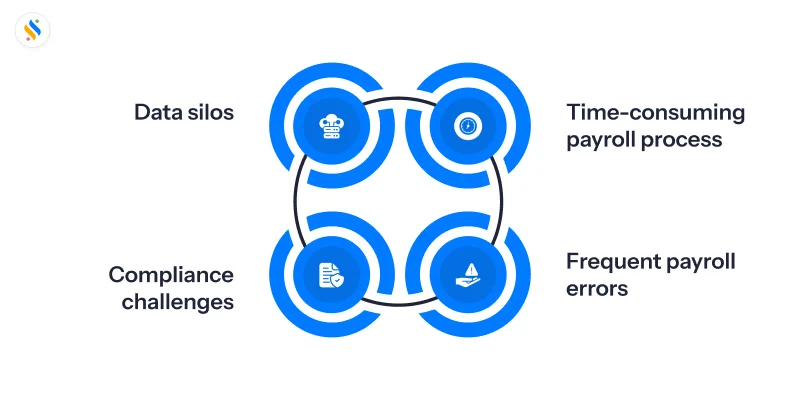
If any of these feel familiar, you are already paying a hidden cost:
Payroll takes days, not hours:
Your team spends weeks because they are buried under spreadsheets cross-verifying every detail.
Errors are becoming routine:
Wrong deductions, missed reimbursements, or incorrect tax details become a normal thing.
Compliance keeps you up at night:
You are unaware of the latest changes in PF, TDS, PT and ESIC, and running here and there regarding the latest updates.
Data lives in silos:
Your attendance data lives on one platform, your leave data in another, and shift data in another – creating confusion.
What does payroll software for medium-sized businesses actually do?
At its core, it replaces manual spreadsheets with automated salary processing. It calculates wages, deductions, taxes, challans, arrears, payslip generation, and more, and everything gets done from the dashboard. It also ensures that businesses remain compliant.
Essential features you should look out for in a payroll software for medium businesses
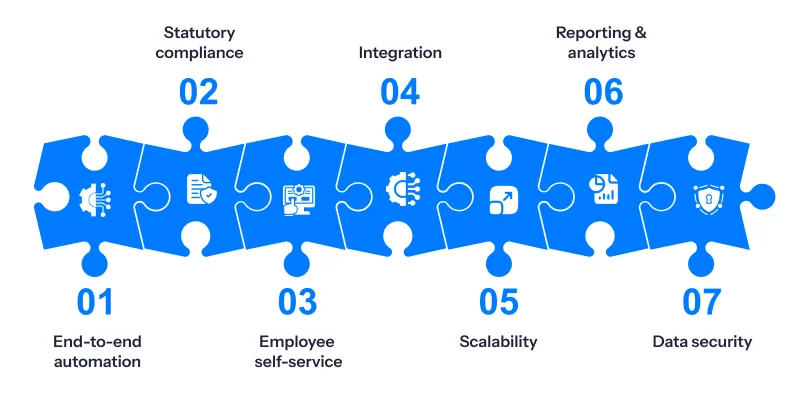
1. End-to-end automation:
The system should handle salary calculation, deductions, arrears, and payslip generation automatically.
2. Built-in statutory compliance:
This is non-negotiable. The tool must handle EPF, ESI, TDS, Professional Tax, and Labour Welfare Fund, and update automatically when rules change.
3. Employee self-service:
Employees should view payslips, download Form 16, and submit investment declarations on their own.
4. Integration:
Payroll should sync with attendance, leave, and your HR database. When leave and attendance data flows straight into the pay run, errors drop significantly.
5. Scalability:
The best payroll software for medium businesses needs to grow with the business. So, if you are hiring 100 new candidates and you are supposed to switch to another system, then there is no point having it.
6. Reporting and analytics:
You need clear reports on payroll cost by department, location, and period. Strong dashboards turn payroll data into decisions your finance team can act on.
7. Data security and privacy:
Payroll holds your most sensitive employee data. Ensure the platform follows solid security practices and supports compliance with the DPDP Act, 2023.
When payroll processing becomes efficient, complexity goes away!
The right system streamlines the process and makes the pay cycle faster, accurate, and stress-free.
Payroll compliance in India: the part that most tools miss
Here is where many payroll software fall short. They can perhaps handle international payroll beautifully, then treat Indian statutory requirements as an afterthought.
For an Indian medium-sized business, that is a real problem. Your payroll software has to manage EPF, ESIC, TDS, PT, LWF, Gratuity, and more.
A tool that automates these accurately is worth far more than one with flashy features but weak local compliance. When you shortlist payroll software for medium-sized businesses in India, test the compliance depth first.
What are the real benefits of getting this right?
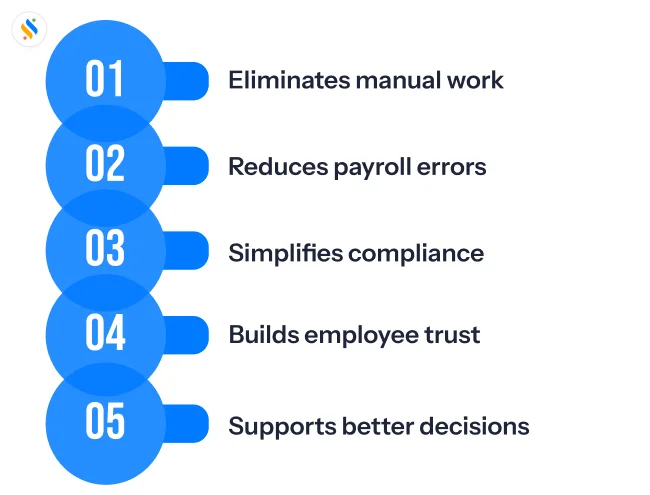
Switching from manual payroll to purpose-built software pays off in ways that go well beyond convenience.
Saves you from manual headaches:
What took days now takes hours. Your HR and finance teams get their month-end back.
Errors go down:
Automated calculations remove the slip-ups that erode employee trust and trigger penalties.
Businesses stay compliant:
Filings and deductions happen on schedule, so audits stop being scary.
Builds employee trust:
Accurate, on-time salaries and easy self-service access keep your people confident and happy.
Effective in making informed decisions:
Clean payroll data shows exactly where your money goes, so you plan headcount and budgets with real numbers.
How to choose the best payroll software that fulfils medium businesses’ needs?
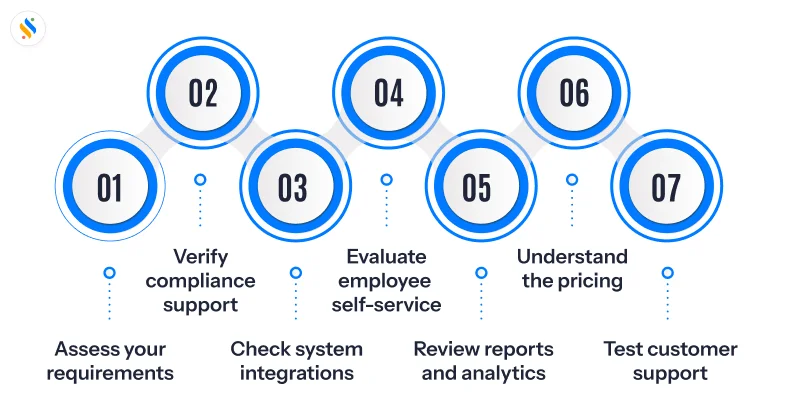
Use this quick checklist before you commit to any vendor:
Ensure that it meets your requirements:
Confirm whether the tool only caters to businesses with a workforce strength of 50 or more, because it will directly impact your payroll processing.
Test the compliance:
Do inquire specifically about how it handles EPF, ESI, TDS, PT, and other compliance requirements.
Check the integrations:
Make sure it seamlessly integrates with your existing HR system, so that the entire data related to attendance, leave, shift, and others can flow straight to the platform.
Try the employee self-service:
Employee self-service will be of no use if employees have to rush to HR to access payslips. Therefore, ensure that the employee self-service feature is working smoothly.
Review the report generation and analytics feature:
Ensure that you can generate essential, accurate reports and analytics in just a few clicks. Also, verify the reports and analytics, because generating reports easily is one thing, but their accuracy is totally another thing.
Be mindful of the pricing:
These tools are priced on two things: Number of users and months. Therefore, be careful with the pricing. Thoroughly look for any add-on prices.
Test support quality:
The litmus test of any payroll tool is how well its support system is. You don’t want to get stuck on the day of payroll. Hence, check their support quality.
Common mistakes to avoid
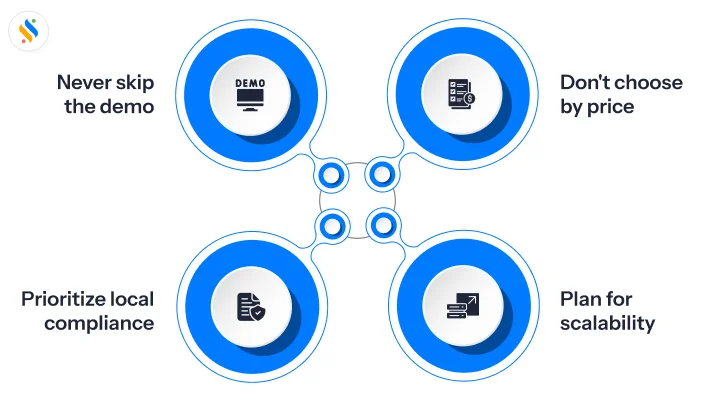
Don’t choose on price alone:
The cheapest tool often lacks the compliance depth you need, which costs far more later.
Don’t ignore scalability:
A system that fits today but not next year forces a painful migration.
Don’t overlook local compliance:
A globally popular brand does not guarantee accurate Indian statutory handling.
Don’t skip the demo:
Marketing pages promise everything. A hands-on trial shows what the tool actually does.
Where does Super Payroll fit?
A top-rated payroll software, Super Payroll enables users to run and manage the entire end-to-end payroll cycle from the dashboard.
Now, for any business, whether it is in India or anywhere around the world, statutory compliance is non-negotiable. The biggest benefit of having Super Payroll is that it automates PF, ESI, PT, TDS, payslips generation, challans, and Form 16 generation, something that is essential for every Indian business.
Employees can view/download payslips, submit declarations, and manage their own details. That cuts routine HR queries sharply. And because Super Payroll connects with the wider Superworks suite, your attendance, leave, and payroll data stay in sync- no double entry required.
Conclusion
It is impossible for any business to ignore payroll processing.
Whether it is a growing enterprise with multiple offices in different cities or a medium-sized business with just 250 workforce strength, no business can ignore its importance.
That’s because it is the heart and soul of a business. It decides how much your workforce is going to get at the end of the month. Now, because of this very same reason, payroll and compliance are the most stressful part of the HR job, especially if they do it manually.
When you are the founder of a mid-sized business, and you are looking forward to adding more workforce, manual processes won’t work. It is time-consuming, error-prone, and one minor mistake can put your entire company in major trouble.
That’s why you need a smart solution…like Super Payroll!
It’s a smart payroll software for medium-sized businesses out there. From payslip generation, compensation management, tax management, to loan management, everything gets easily taken care of from the user-friendly dashboard of Super Payroll.
Not only that! PF, TDS, ESI, and PT – Super Payroll automates everything, so that you don’t have to get stressed about compliance. Also, you can generate all the essential reports accurately in real-time.
And since it’s a part of the Superworks business management suite, it integrates seamlessly with other Superworks’ modules. It is scalable and offers economical plans and prices. So, why go to hefty tools when you can take care of your entire payroll and compliance without breaking your bank?










