TL; DR
A payroll processing system automates payroll calculations, manages the payroll process, and disburses employees’ salaries. In India, a good payroll management system does more than pay people on time. It keeps you aligned and updated with reforms. This guide breaks down what the system actually does, how the payroll system process works step by step, and what to look for before you invest in one.
Every business runs on people. And every person on your payroll expects to be paid correctly, on time, every single cycle.
That sounds simple. But it rarely is.
Between shifting tax slabs, state-wise Professional Tax rules, PF and ESI thresholds, and now the new Labour Codes, Indian payroll has become a moving target. A single manual error in gross pay or a missed compliance filing can cost you money, employee trust, or both.
This is where a payroll processing system earns its place. It’s not just software that “does payroll.” It’s the operational backbone that keeps compensation accurate, compliant, and audit-ready, month after month.
Let’s get into what it actually is, and why more Indian businesses are moving away from spreadsheets in 2026.
Why the manual way of payroll processing doesn’t work anymore?
Spreadsheets worked when you had 15 employees in one office. They stop working the moment you add a second location, a new state’s Professional Tax rules, or your headcount crosses 50.
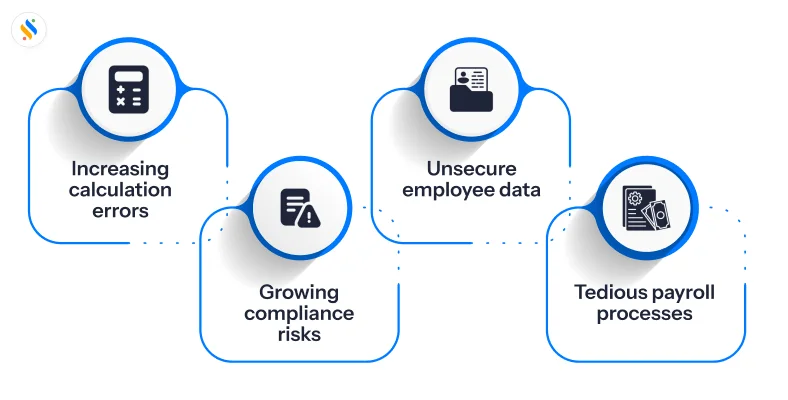
Here’s where manual payroll typically breaks down:
Increasing calculation errors:
One wrong formula in a spreadsheet doesn’t just affect one employee. It replicates across every payslip until someone catches it, usually after payments have already gone out. This can affect salary calculation, tax deductions, and the final net pay employees receive.
Problems with compliance:
India’s payroll compliance load has only grown heavier. With the latest and updated reforms, businesses managing compliance manually are at major risk. Missing deadlines or inserting incorrect details can lead to heavy penalties and serious legal troubles.
Employee data remains unsecure:
One of the biggest problems in managing payroll and compliance through spreadsheets is that all the employee data – their personal details, bank details, salary details, tax declarations, deductions, bonuses – everything is vulnerable to serious threats.
Tedious & time-consuming process:
Reconciling attendance, leaves, overtime, and reimbursements manually will take days. That time only grows as headcount grows. HR ends up spending a great deal of time doing repetitive work and manual data entry.
What is a payroll processing system?
A payroll processing system is a software solution that automates the entire cycle of paying employees, from calculating gross pay to depositing net salary in their bank accounts.
So, what is a payroll processing system, exactly, in practical terms? It’s the engine that pulls in attendance and leave data, applies your salary structure, deducts statutory contributions, generates payslips, and files the required compliance reports. All without a single spreadsheet formula breaking at month-end.
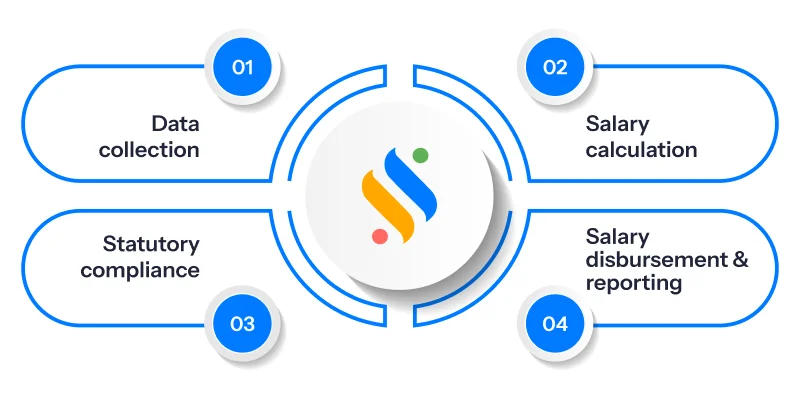
At its core, the system handles four things:
Data collection:
Attendance, leaves, overtime, and new joiner or exit details are collected as part of the payroll management process.
Salary calculation:
Gross pay, deductions, reimbursements, and net pay.
Statutory compliance:
PF, ESI, TDS, Professional Tax, and now Labour Code-aligned wage rules.
Salary disbursement and reporting:
Bank transfers, payslips, and statutory filings.
Think of it as the difference between manually reconciling numbers every 30th of the month and having a system that already knows the rules, the deadlines, and the math.
Accurate payroll processing starts with the right system!
From salary calculations to compliance reporting, bring the entire payroll process into one connected system.
How does the payroll system process actually work?
Every payroll system process, regardless of the software you use, follows three broad phases. Understanding these helps you evaluate whether a platform is actually built for how payroll works, or just built to look like it is.
1. Pre-payroll phase:
This is the foundation, and getting it right is essential. The system pulls in employee data like attendance and leave records, new joiner details, exits, and any changes to salary structure or benefits. Everything gets verified here before a single calculation runs. Skip this step, or get it wrong, and every number downstream is wrong too.
2. Payroll calculation phase:
This is the heart of the payroll processing system. It computes gross pay, applies statutory and voluntary deductions, factors in reimbursements and bonuses, and arrives at net pay. This phase also applies your specific salary structure rules, whether that’s CTC-based pay, variable components, or arrears from a mid-cycle revision.
3. Post-payroll phase:
Once numbers are locked, the system disburses salaries. It also handles statutory compliance and generates forms like Form 16 and Form 12BB. A strong system keeps an audit trail through this entire phase, so you’re never scrambling during a compliance review.
Key benefits of an automated payroll processing system:
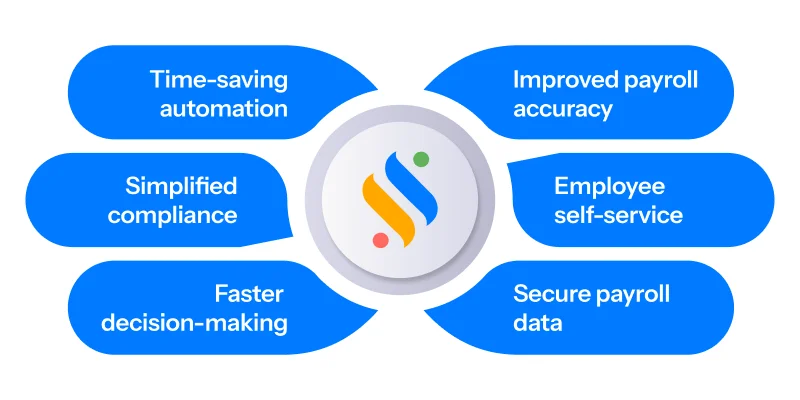
1. Automation that saves time:
The biggest advantage of having an efficient payroll processing system is that it automates the process and eliminates repetitive manual tasks. So, instead of spending days, HR and finance teams can complete the process faster and use their time for more strategic work. Payroll automation also keeps every pay run consistent, month after month.
2. Complete accuracy:
Manual payroll processing increases the risk of calculation errors, incorrect deductions, and discrepancies in employee salaries. An automated payroll processing system performs calculations based on predefined rules and employee data. This way, human errors go down.
3. Businesses remain compliant:
Payroll not only involves salary processing. It also involves statutory compliance. An automated payroll system helps businesses calculate and manage these compliances accurately. This reduces the risk of non-compliance, penalties, and other legal problems related to payroll taxes, income tax, and statutory filings.
4. Employee self-service:
When employees can pull their own payslips, tax documents, and investment declarations without emailing HR, your team gets hours back every month. It also builds trust: employees see their numbers directly instead of waiting on someone else to confirm them.
5. Faster decision-making with real-time data:
The biggest drawback of creating payroll reports manually is that it is not only error-prone, but also extremely tedious and time-consuming. On top of that, if any errors come up, additional time will go into fixing them. Instead of this, with an efficient payroll system, top management can go to the dashboards, generate reports in minutes, and can see analytics in real-time. This way, decision-makers can make faster and better decisions.
6. Data remains secure:
Storing papers in a filing cabinet is risky. Secure cloud-based systems use data encryption. This means role-based access with strong encryption can access important documents.
How to choose the right payroll processing system?
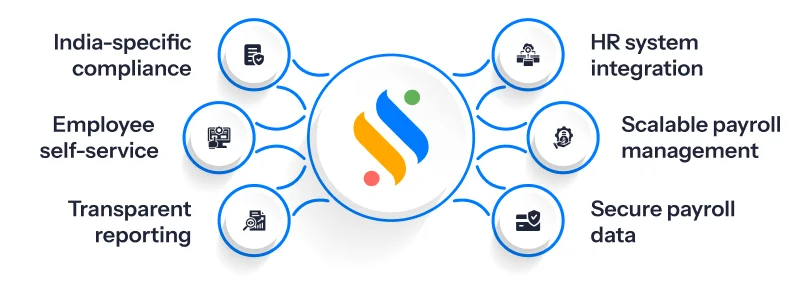
Not every payroll software is built for how Indian businesses actually operate. Before you commit, look for the following things:
India-specific compliance:
In the Indian context, key statutory compliance includes PF, ESI, TDS, and PT. In addition to this, there are new Labour Codes and state and central laws. Therefore, it is essential to ensure that the system offers built-in compliance and updates by itself. This way, the business remains secure from legal problems all the time. Teams that want experts handling the monthly run can also pair the software with a Payroll service in india.
Integration with attendance, leave, and HR systems:
Payroll shouldn’t sit in isolation. Data on attendance, leave, and employee changes should flow into the payroll engine automatically, with no manual re-entry and no risk of one system holding different numbers than another.
Employee self-service:
Employees can perform certain tasks like view/download payslips, tax declarations, manage loans, get Form 12BB & 16, reimbursement claims, and more without relying on HR. This cuts admin load.
Scalability:
As you add states, entities, or pay structures, the system should absorb that complexity without needing a rebuild. Check how the vendor handles multi-state Professional Tax rules and multiple legal entities before you’re locked in.
Transparent reporting:
You need real visibility into cost-per-employee, statutory filings, and audit trails, not static reports you have to reconstruct manually every time finance or an auditor asks a question.
Data security:
Security is critical. Features like encryption, role-based access, and audit logs should be a part of the plan, even if it is a standard one. With the DPDP Act in effect, this is a compliance requirement as much as a technical one.
Super Payroll: India’s own payroll software for smart businesses!
A module of Superworks, Super Payroll is a solution for how Indian businesses should process their payroll and manage their compliance. Whether it is statutory compliance like PF, ESIC, TDS, and PT, automating the salary process, generating Form 16, or generating accurate payroll reports & analytics, everything gets managed from the dashboard. But what makes Super Payroll unique:
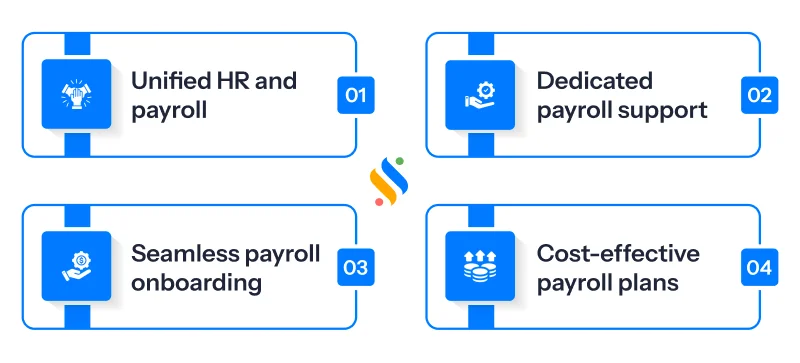
HR and payroll get managed from one platform:
Because Super Payroll is a module of Superworks, it seamlessly integrates with another module, Super HRMS. This means that employees’ attendance, leave, OTs, reimbursements, expenses – every piece of data flows from Super HRMS to Super Payroll. This way, there is no need for managing separate spreadsheets for everything. Everything gets managed from the one platform.
An exceptional support team at your disposal:
Questions about Professional Tax in a specific state or how the Labour Codes affect your gratuity provisioning go to a team that already deals with Indian payroll every day, not a global support queue reading from a script.
Seamless onboarding:
Because it isn’t a general-purpose global product being configured for India, onboarding doesn’t involve reverse-engineering a foreign system to fit local rules. Most businesses are up and running well before their next pay cycle.
Economical prices and plans for businesses:
You’re not paying for a global enterprise license to cover a 50- or 200-person team; plans scale with your headcount and needs.
Conclusion
Many businesses limit payroll processing to just timely delivery of salaries to employees. But it’s not just about paying salaries on time. It’s also about ensuring it is accurate, well-structured, and compliant with the norms. At the same time, it is also necessary to ensure that the business, in general, remains compliant with the state and central government regulations.
Now, doing all this without any errors and with complete efficiency is not possible with a manual way of payroll processing. That’s why there is a need for a smart payroll processing system, one that takes the weight off of your team’s shoulders.
Having it in your business is an assurance that all the calculations will be correct and compliance like PF, ESIC, TDS, and PT will be taken care of. Not only that, any changes in the labour law codes will be updated in the system, and employees can even perform certain tasks on their own without the need to rely on HR.
This is also essential for your HR and finance team, as they can be freed up from the tedious and time-consuming task of doing payroll processing and compliance manually and focus on important matters.
This is the core of a payroll processing system, something that we talked about in great detail.
So if you’re still running payroll manually, it’s high time to look for a system that can structure and streamline it. And if you are looking for a solution, we have the right solution just for you. One of the top-rated payroll software in India, Super Payroll is delivering promising results. No matter what the business size is, industry, or the workforce strength, it simplifies payroll processing, automates salary calculations, manages statutory compliance, and gives users complete control over their payroll-related needs.
Ready to simplify payroll for your business? Book your Super Payroll demo now!









